

Table of Contents
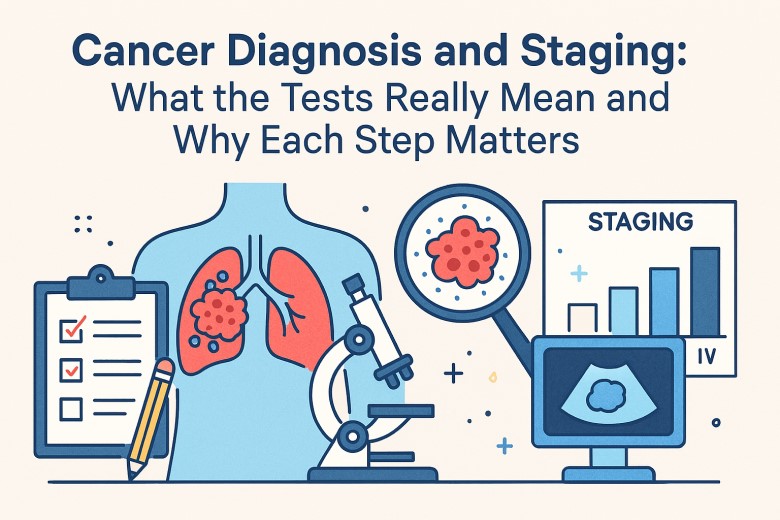
Cancer diagnosis is not a single test or a single appointment. It is a structured clinical process designed to answer three critical questions: Is it cancer? What type is it? How far has it spread? The answers determine whether treatment should focus on surgery, medication, radiation, or a combination approach.
At Liv Hospital, the goal of diagnosis and staging is not only accuracy, but also speed and clinical confidence. A well-organized diagnostic pathway reduces delays, avoids unnecessary procedures, and ensures that treatment begins with the right plan from the start.
Why Diagnosis and Staging Are Treated as One Connected Process
Many people assume diagnosis comes first and staging happens later. In reality, these steps overlap. Imaging can suggest spread even before a biopsy is done. Some cancers require staging scans before the safest biopsy method is selected.
This is why modern oncology treats diagnosis and staging as a combined roadmap rather than separate events.
The First Stage: Risk Assessment and Clinical Examination
The diagnostic process begins with a detailed medical history and physical exam. This step may seem simple, but it provides essential context that influences the rest of the pathway.
Doctors evaluate:
- How long symptoms have been present
- Whether symptoms are worsening
- Family history of cancer
- Past medical conditions and prior radiation exposure
- Lifestyle factors such as smoking, alcohol use, or occupational exposure
The physical exam may include lymph node checks, abdominal palpation, breast examination, rectal exam, or neurological evaluation depending on the suspected cancer type.
The Role of Blood Tests in Cancer Evaluation
Blood tests are often the first investigations ordered because they are fast and non-invasive. While blood tests rarely confirm cancer alone, they can indicate whether a deeper evaluation is necessary.
Doctors may use blood work to check for:
- anemia (low red blood cells)
- signs of infection or immune suppression
- liver or kidney strain
- abnormal clotting markers
- specific tumor markers in selected cancers
Blood tests also help determine whether a patient is stable enough for biopsy, imaging with contrast, or sedation.
Imaging: How Doctors Locate Tumors and Look for Spread
Imaging is essential in modern oncology because cancer is defined not only by what it is, but also by where it is.
Common imaging tools include:
Ultrasound
Often used for thyroid lumps, abdominal symptoms, breast masses, and lymph node evaluation.
CT Scan
A core staging tool for many cancers. It helps detect organ involvement and lymph node enlargement.
MRI
Used when detailed soft-tissue resolution is needed, such as brain tumors, spinal lesions, pelvic cancers, prostate tumors, and liver masses.
PET-CT
Used to identify metabolically active cancer tissue and detect spread that might not be obvious on CT or MRI.
Imaging helps doctors plan biopsy safely and decide whether staging is already showing localized disease or systemic involvement.
Biopsy: The Defining Step in Cancer Diagnosis
No matter how suspicious a scan looks, cancer diagnosis requires confirmation through tissue or cells.
Read This content: Cancer Symptoms and Causes: What Your Body May Be Telling You
A biopsy provides:
- confirmation of malignancy
- cancer type (carcinoma, lymphoma, sarcoma, etc.)
- grade (how aggressive the cells appear)
- additional markers needed for targeted therapy
Biopsies may be performed through:
- needle biopsy (often image-guided)
- endoscopic biopsy (digestive tract, lungs, bladder)
- surgical biopsy (when deeper access is required)
A well-chosen biopsy method is important because poor samples can delay diagnosis and lead to repeat procedures.
Pathology and Molecular Testing: Defining the Tumor Beyond the Microscope
Once tissue is collected, pathology does more than simply label the cancer.
It can identify:
- receptor status (such as ER/PR/HER2 in breast cancer)
- immune markers
- cell origin and subtype (critical in lymphoma and leukemia)
- genetic mutations that guide precision treatment
Modern oncology increasingly relies on molecular testing because cancers that look similar under the microscope may behave very differently in the body.
Cancer Staging: How Doctors Determine Stage I to Stage IV
Staging is the medical system used to describe how far cancer has progressed. The most common global model is the TNM system.
- T (Tumor): size and local invasion
- N (Nodes): lymph node involvement
- M (Metastasis): spread to distant organs
These results are then grouped into stages:
- Stage I: localized, early disease
- Stage II: larger tumor or limited spread nearby
- Stage III: significant local extension or multiple lymph nodes involved
- Stage IV: metastatic disease involving distant organs
Staging is not just for classification. It determines whether the goal is cure, long-term control, or symptom management.
Read This content: Pink Yoga Mat: The Trend Every Home Yogi Loves
Clinical Staging vs Pathological Staging
Some patients receive two staging results.
- Clinical staging is based on imaging and physical exams
- Pathological staging is based on tissue removed during surgery
Pathological staging can sometimes reveal additional lymph node involvement or deeper invasion that imaging did not detect.
This is why treatment plans may be adjusted after surgery.
Why Accurate Staging Prevents Overtreatment and Undertreatment
Staging directly affects the intensity of therapy.
- Early-stage cancers may be treated with surgery alone
- Intermediate stages often require combined therapy
- Advanced-stage cancers usually require systemic treatment
Accurate staging prevents:
- unnecessary chemotherapy for early cancers
- delayed systemic therapy for cancers already spread
- incomplete surgery when the disease is more extensive than expected
When Diagnosis and Staging Are Complete: The Next Step Is Strategy
Once the cancer type and stage are confirmed, the medical team can plan treatment sequencing, such as:
- surgery first, then chemotherapy
- chemotherapy first to shrink the tumor, then surgery
- radiation for local control
- targeted therapy based on genetic findings
- immunotherapy where appropriate
A detailed overview of this diagnostic pathway is also covered on CANCER Diagnosis and Staging, where the full staging approach is explained in a structured format.
Supporting the Patient During the Waiting Period
Even when diagnostic steps move quickly, the emotional stress of waiting can be intense. Patients benefit from:
- clear scheduling
- consistent medical communication
- supportive counseling
- guidance on nutrition and sleep during testing
Once diagnosis and staging are complete, many patients also explore wellness strategies to strengthen resilience during treatment. For supportive lifestyle-focused health guidance, the final stage of planning may include resources from live and feel.
